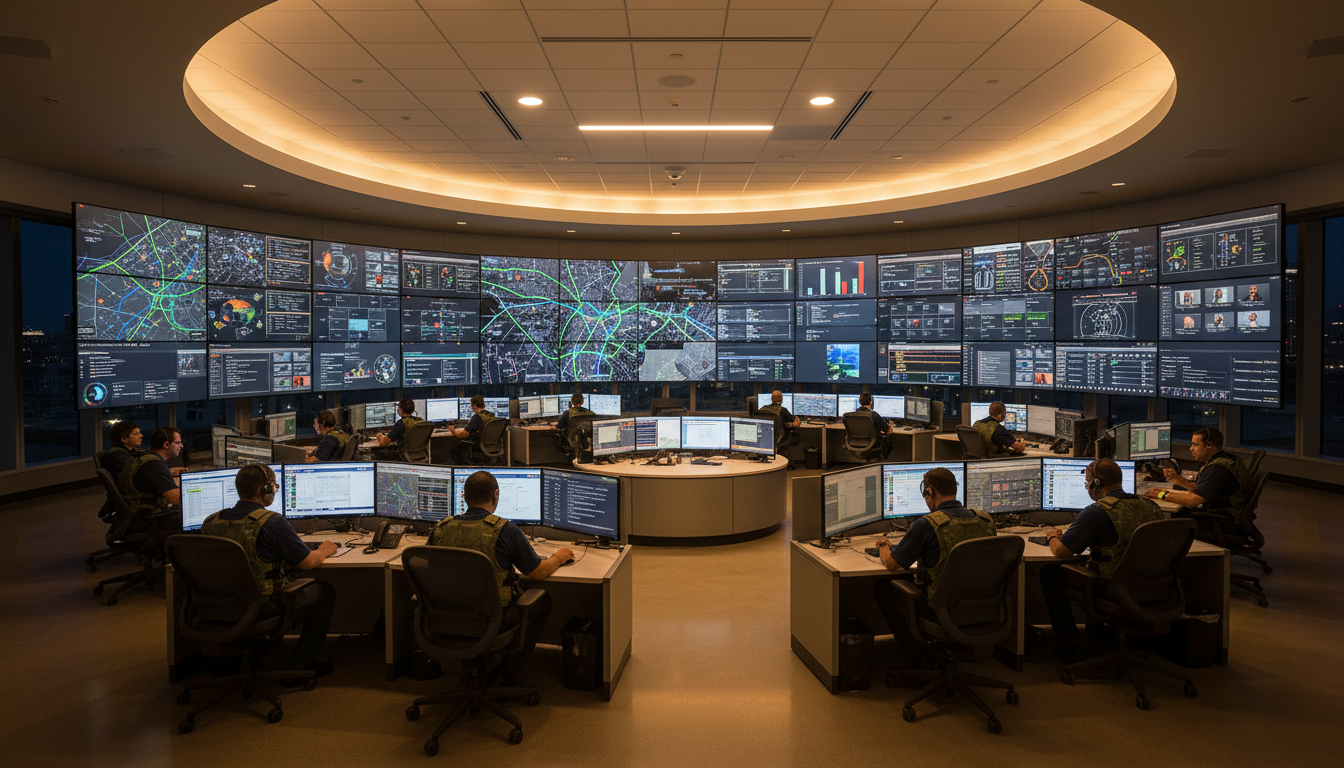
For decades, emergency management technology evolved slowly. Agencies adopted systems designed for stability over innovation, often built on architectures that predated the smartphone era. These systems served their purpose, but they've also created limitations that are increasingly difficult to work around.
That's changing. The next generation of emergency management technology will look fundamentally different—not just in features, but in how it's built, deployed, and evolved over time.
From Static Systems to Living Platforms
Traditional emergency management software follows a familiar pattern: large upfront implementations, periodic major upgrades (often years apart), and customizations that make future updates increasingly difficult.
Modern platforms operate differently. Continuous deployment means improvements can be delivered weekly or even daily. Cloud infrastructure eliminates the hardware refresh cycles that forced agencies into disruptive upgrade projects. API-first architecture allows systems to connect and share data in ways that were impractical just a few years ago.
For emergency managers, this shift means technology that can evolve alongside changing threats and requirements rather than locking agencies into decisions made years ago.
AI as a Force Multiplier
Artificial intelligence in emergency management isn't about replacing human decision-makers—it's about amplifying their capabilities. The most promising applications focus on tasks that are time-consuming, repetitive, or require processing more information than humans can handle effectively.
Near-term AI applications in emergency management:
- Document generation: Creating exercise materials, plans, and reports from structured inputs
- Pattern recognition: Identifying trends in incident data that might indicate emerging threats
- Resource optimization: Improving staging and allocation decisions during response
- Communication drafting: Generating initial public information messages for human review
- Translation and accessibility: Real-time translation and format conversion for diverse populations
The key phrase is "for human review." AI works best as a drafting tool that gets humans 80% of the way there, not as an autonomous decision-maker for high-stakes situations.
The End of Data Silos
One of the most persistent challenges in emergency management is information fragmentation. Dispatch systems don't talk to shelter management software. Exercise data lives in spreadsheets disconnected from planning systems. Grant information exists in a different universe from operational metrics.
Modern integration standards and API-based architectures are making it possible to connect these systems in ways that create genuine operational value. When information flows automatically between systems:
- Situational awareness improves because data doesn't need to be manually re-entered
- Decision-makers see the complete picture rather than fragments
- After-action analysis can draw on comprehensive data sets
- Reporting becomes a byproduct of operations rather than a separate burden
Mobile-Native Design
Emergency management happens in the field at least as much as it happens in EOCs. Yet many systems were designed primarily for desktop use, with mobile access added as an accommodation rather than a core design principle.
Future systems will flip this assumption. Mobile-native design means:
- Interfaces optimized for variable connectivity, not just fast office networks
- Offline capabilities that don't compromise functionality during communications failures
- Camera, GPS, and sensor integration as standard features
- Authentication methods appropriate for field conditions
This matters because disasters don't wait for responders to get back to their desks. Technology that only works well in the office fails precisely when it's needed most.
Security as Foundation
Emergency management systems contain sensitive information about vulnerabilities, response capabilities, and critical infrastructure. The next generation of systems needs to treat security as a foundational requirement, not an add-on:
- Zero-trust architectures that verify every access request
- Encryption for data at rest and in transit
- Regular security assessments and penetration testing
- Compliance with frameworks like FedRAMP, StateRAMP, and CJIS where applicable
What This Means for Agencies
Emergency management agencies evaluating technology investments should consider several questions:
- How often does this system receive updates? Monthly or more frequent updates suggest active development; annual updates may indicate maintenance-mode thinking.
- What's the integration strategy? Can this system exchange data with other tools you use, or will it create another silo?
- How does mobile access work? Is it a full-featured experience or a limited portal?
- How is AI being used, and where are the human checkpoints? Be wary of systems that claim AI decision-making without human oversight.
Key Takeaways
- Modern cloud platforms enable continuous improvement rather than disruptive upgrade cycles
- AI is most valuable as a drafting and analysis tool, not an autonomous decision-maker
- Integration between systems creates operational value that isolated tools can't match
- Mobile-native design is essential for field operations
- Security must be foundational, not an afterthought
Looking Ahead
The emergency management technology landscape is more dynamic than it's been in decades. Agencies that approach technology as a strategic capability—rather than just an administrative necessity—will be better positioned to protect their communities in an era of escalating and evolving threats.
The future isn't about any single technology. It's about building systems that can adapt as quickly as the threats they're designed to address.
 approaches modern software development for mission-critical applications.