
In December 2024, the Arizona Auditor General released Report 24-212 — a comprehensive evaluation of emergency operations planning across 47 Arizona schools, including both public districts and charter schools. The audit tested each school's Emergency Operations Plan (EOP) against 30 state minimum standards and evaluated whether schools had implemented and tested their plans.
The headline finding: zero out of 47 schools met all EOP minimum standards. Sixty percent met fewer than half. Three charter schools had no emergency plan at all.
These numbers are striking, but they shouldn't be surprising. The challenges Arizona's audit uncovered — under-resourced staff, competing priorities, unclear guidance, and lack of monitoring — exist in school districts across the country. The audit didn't reveal an Arizona problem. It documented a national one.
The Plans Themselves Are Falling Short
The audit evaluated EOPs across seven categories: command structure, plan approval, EOP activation, emergency response considerations, communication, emergency locations and routes, and required documentation. The results paint a picture of widespread, fundamental gaps.
Key findings from the EOP review:
- 15 of 44 EOPs included a proper ICS command structure with all required elements
- 10 of 44 addressed how to assist students with disabilities or limited English proficiency
- 7 of 44 included procedures for before- and after-school emergencies
- 4 of 44 included parent/guardian contact details
- 2 of 44 had proper evacuation routes and assembly areas
- 1 of 44 had facility maps with all required components
- 0 of 44 included all required prepared statements and crisis communication letters
These aren't obscure technicalities. ICS command structures determine who's in charge during an emergency. Evacuation routes save lives. Prepared crisis communications prevent panic. When these elements are missing from the plan, they're missing from the response.
Perhaps most telling: not a single school had all the prepared statements and letters required for communicating with faculty, students, parents, and media during an emergency. Crisis communication is one of the most consequential elements of emergency response — and it was universally absent.
Plans That Exist Aren't Being Tested
Having a plan on paper is only the first step. The audit's second major finding was equally concerning: zero out of 47 schools had fully implemented and tested their EOPs.
- Only 23 of 47 schools met monthly evacuation drill requirements mandated by the State Fire Marshal
- Only 12 of 47 documented debrief sessions after all their drills
- Only 11 of 44 conducted the required annual EOP review
- Only 16 of 37 schools with substitute teachers trained them on emergency procedures
- 40 of 47 schools failed to post all required safety reference materials in classrooms and assembly areas
- Zero out of 35 schools with buses posted safety materials in transportation vehicles
The drill documentation gap is particularly revealing. Even when schools conducted drills, most didn't document what happened or debrief afterward. Without debriefing, drills become rote motions rather than learning opportunities. Mistakes repeat. Gaps persist. The exercise exists for compliance, not improvement.
Why This Happens: The Capacity Problem
The audit doesn't just catalog failures — it documents why they occur. The barriers schools reported are familiar to anyone who works in emergency management:
- Staffing constraints: School administrators responsible for emergency planning are also responsible for everything else. There is no dedicated EM role in most schools.
- Turnover: 37% of emergency management directors nationwide have been in their position three years or fewer, according to the 2025 EM Capacity Study. In schools, turnover among principals and safety coordinators is even more acute.
- Unclear guidance: The audit found that Arizona's EOP Minimum Standards themselves were vague, using language like "may include" and "consider" rather than clear requirements — leaving schools unsure what was actually expected.
- No monitoring: Arizona had no mechanism to monitor whether schools actually complied with EOP requirements. Four of five comparable states reviewed by the auditors did.
- Limited coordination: Only slightly more than half of schools reported involving law enforcement in EOP development, despite statutory requirements to do so.
The underlying problem is capacity. The people responsible for school safety are stretched thin, often filling the role on top of their primary duties. They aren't failing because they don't care. They're failing because the task is enormous and the resources are minimal.
How Exercises Close the Gap
The audit's recommendations focus heavily on compliance monitoring, clearer standards, and stakeholder coordination. These are necessary structural fixes. But they don't solve the day-to-day problem: school staff who need to build, test, and maintain emergency plans with limited time and expertise.
This is where tabletop exercises become a force multiplier. A well-designed exercise doesn't just test a plan — it reveals gaps, builds staff confidence, and creates the documentation that auditors and administrators need. Consider how exercises address the specific gaps the audit identified:
Testing ICS command structures
Only 15 of 44 schools had proper ICS structures in their plans. A tabletop exercise that walks staff through a scenario forces participants to identify who's in charge, who fills each ICS role, and what happens when the principal isn't available. The exercise itself reveals whether the command structure exists — and whether people know it.
Practicing crisis communications
Zero schools had all required prepared statements. An exercise that includes communication injects — "parents are arriving and demanding information," "a reporter is calling," "what message goes out to staff?" — forces schools to draft, review, and practice crisis communications in a low-stakes environment. The exercise materials become the templates the plan needs.
Building drill debriefing habits
Only 12 of 47 schools documented debriefs after all drills. Tabletop exercises come with built-in evaluation frameworks — structured debrief questions, evaluation forms, and after-action documentation. When staff experience a structured debrief during a tabletop, they're more likely to apply that discipline to physical drills.
Training staff — including substitutes
Fewer than half of schools trained substitute teachers on emergency procedures. Tabletop exercises designed for school settings can include scenarios that specifically address: what does a substitute teacher do during a lockdown? Where do they find evacuation routes? Who do they call? The exercise becomes the training.
Addressing before- and after-school scenarios
Only 7 of 44 schools had procedures for emergencies outside normal hours. An exercise scenario set during a before-school program or an after-school athletic event forces staff to confront the question: who's in charge at 6:30 AM or 7:00 PM? What's the evacuation plan when half the building is locked?
Technology as a Force Multiplier
The capacity problem is real. School administrators don't have weeks to develop comprehensive tabletop exercises from scratch. But the cost of not exercising is documented in the audit's findings: untested plans, untrained staff, undocumented drills.
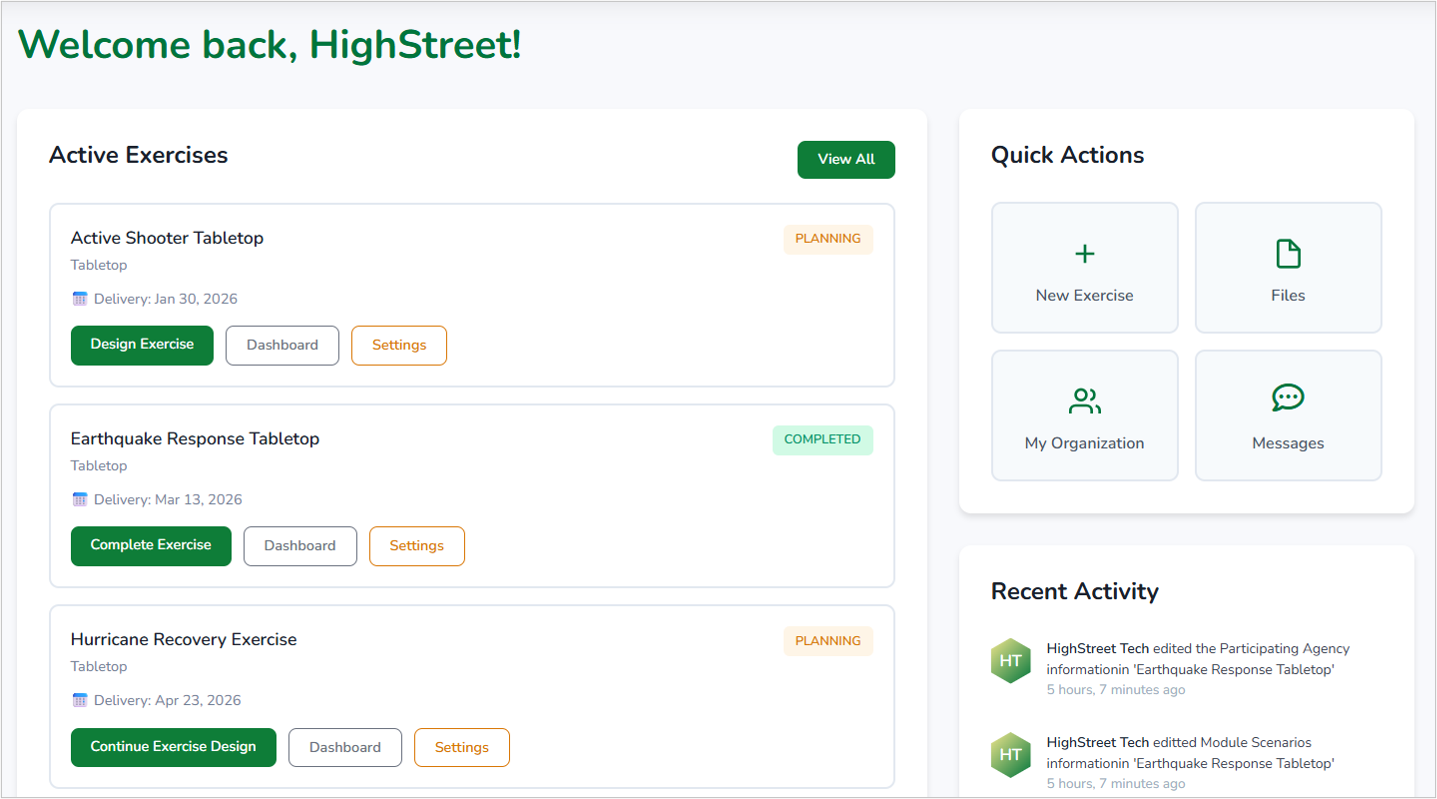
This is exactly the problem tools like Beehive were built to solve. Beehive uses AI to generate HSEEP-aligned exercise packages — situation manuals, facilitator guides, evaluation forms, and presentations — in a fraction of the time manual development requires. A school administrator who can't spend three weeks building a tabletop exercise can have professional-grade materials ready in hours.
For the specific gaps the Arizona audit identified, an AI-powered exercise platform can:
- Generate scenario-specific exercises that test ICS structures, crisis communications, evacuation procedures, and reunification plans — the exact areas where schools failed
- Produce evaluation forms and debrief templates that create the documentation trail schools need to demonstrate compliance
- Create exercises tailored to school contexts — lockdown scenarios, active threat responses, weather events, before/after-school emergencies — without requiring deep EM expertise from the facilitator
- Build institutional knowledge that persists through staff turnover, so the next administrator doesn't start from zero
Technology won't fix the structural issues the audit identified — the unclear standards, the lack of monitoring, the need for better coordination with law enforcement. Those require policy changes. But technology can give under-resourced schools the capacity to actually exercise and test their plans, which is where the audit found the most pervasive failures.
Key Takeaways
- Arizona's audit found 0 of 47 schools met all EOP standards; 60% met fewer than half — and the underlying causes aren't unique to Arizona
- The biggest gaps are in crisis communications (0/44), evacuation routes (2/44), and facility maps (1/44)
- Implementation failures are as serious as planning failures — only 23 of 47 schools met drill requirements, and only 12 documented all debriefs
- The root cause is a capacity problem: school staff lack dedicated time, training, and resources for emergency planning
- Tabletop exercises address multiple gaps simultaneously — testing plans, training staff, building documentation, and practicing communications
- AI-powered exercise tools can give under-resourced schools the capacity to run professional exercises without weeks of development time
A Path Forward
The Arizona audit is a wake-up call, but it's also a roadmap. The gaps it identifies are specific and measurable. The recommendations are actionable. And the underlying message is clear: schools need more support, not just more mandates.
For school administrators reading this: you don't have to solve everything at once. Start with a single tabletop exercise that tests your most critical gap. If your ICS structure is unclear, run a scenario that forces command decisions. If your crisis communications don't exist, use an exercise to draft them. If your drills lack debriefing, use a structured exercise evaluation to build the habit.
The audit documented what many in the field already know: schools are doing their best with limited resources. The answer isn't to demand more from people who are already stretched thin. It's to give them better tools.